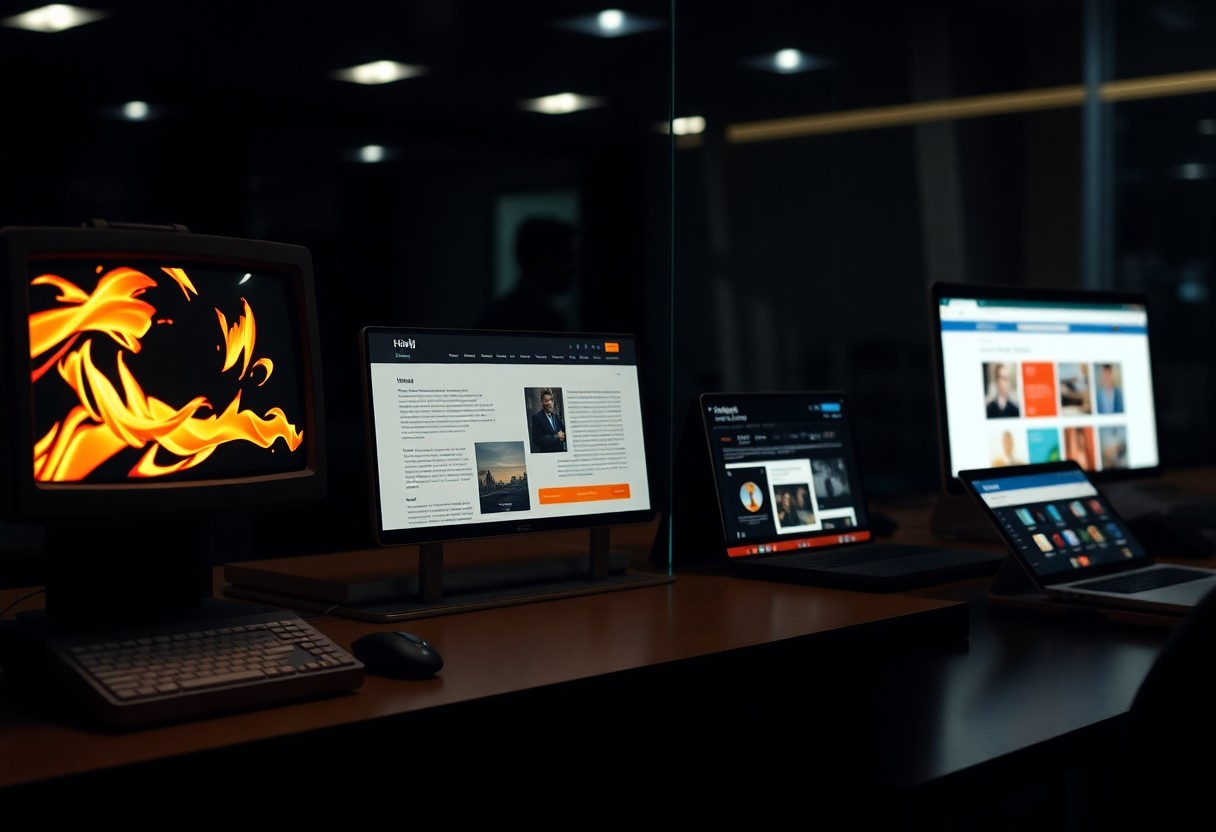
The Evolution of Web Design – From Flash to HTML
Most web designers and developers recognize the dramatic changes in web design over the last two decades. You might recall the era of Flash animations, which captivated users with vibrant graphics and interactivity, only to be replaced by more streamlined and accessible technologies. Understanding this evolution from Flash to HTML is imperative for anyone looking to create modern web experiences that engage users and function across all devices. Explore how these shifts have shaped design principles and user expectations in today’s digital landscape.
The Rise of Flash
Flash emerged in the late 1990s as a revolutionary tool, enabling designers to create rich multimedia experiences on the web. It allowed for interactive content, animations, and video integration, making websites more engaging. With its distinctive capabilities, Flash quickly became the go-to solution for creating dynamic interfaces, drawing in millions of users and paving the way for advanced web design.
The Early Days of Web Animation
In its infancy, web animation was largely constrained by the limitations of HTML and GIF files. Flash introduced vector-based graphics, which allowed for smoother animations and smaller file sizes. Your websites transformed from static pages into vibrant, animated spaces where creativity flourished. As Flash files gained popularity, the web began to breathe with motion, music, and interactivity.
The Impact of Flash on User Experience
Flash fundamentally reshaped user experience by turning passive viewers into active participants. Engaging animations and interactive elements catered to a heightened sense of immersion, capturing attention and fostering deeper user engagement. Websites boasting Flash features often recorded longer visit durations, reflecting its effectiveness in retaining user interest.
Studies highlighted significant increases in user engagement, with Flash-driven sites boasting up to a 200% increase in visitor interaction. The rich multimedia content facilitated storytelling, enhancing emotional connections with brands. Gamification elements emerged as designers sought to leverage user motivation, resulting in interactive experiences that elevated brand loyalty. However, as mobile devices surged in popularity, the inherent limitations of Flash became evident, leading to its decline as new technologies, particularly HTML5, began to redefine the web landscape.
Transition to HTML
As Flash began to decline in popularity, web designers and developers sought more stable, accessible solutions. The transition to HTML reflected a need for faster loading times, better compatibility across devices, and improved search engine optimization. By shifting towards standard web technologies, you embraced a more universal approach, allowing your designs to be attractive and functional without relying on proprietary software. This movement towards HTML marked a pivotal moment in web development, ensuring that websites could evolve independently of specific plugins or applications.
The Emergence of HTML5
HTML5 emerged as the groundbreaking iteration of HTML, introducing new features that transformed web design. You gained access to native support for audio and video elements, eliminating the need for Flash for multimedia content. Additionally, HTML5’s improved semantic elements, like ,, and , provided a clearer structure for your web documents, enhancing both accessibility and search engine visibility. This evolution allowed for a more dynamic, responsively designed web experience, aligning with modern user expectations.
Advantages of HTML Over Flash
HTML offers numerous advantages over Flash, making it the preferred choice for modern web design. You benefit from faster loading times since HTML delivers content directly, without the overhead of a plugin like Flash. HTML’s compatibility with all major browsers ensures that your content is viewable everywhere without the risk of users having to download additional software. Moreover, HTML provides superior SEO capabilities, allowing search engines to index your pages effectively, driving more traffic to your site. The advantages of HTML extend well beyond just performance and SEO. Compatibility across devices is another significant benefit; while Flash struggles with mobile platforms, HTML seamlessly adapts to smartphones, tablets, and desktops alike. In addition, accessibility becomes simpler, as HTML allows screen readers to interpret content more effectively, catering to users with disabilities. Furthermore, enhancing user experience with HTML5 capabilities, such as local storage and geolocation, empowers you to create engaging applications that were once exclusive to Flash.
Responsive Web Design
Responsive web design emerged as a revolutionary approach, allowing websites to adapt seamlessly across a wide range of devices and screen sizes. This flexibility enhances user experience by ensuring that content remains accessible and visually appealing, regardless of whether you’re viewing it on a smartphone, tablet, or desktop. As mobile internet usage continues to rise, responsive design becomes necessary for maintaining engagement and site functionality.
The Need for Mobile-Friendly Sites
With over half of global web traffic coming from mobile devices, ensuring your website is mobile-friendly is not optional. Sites that are not optimized for smaller screens can lead to higher bounce rates and frustrated users. Google has also incorporated mobile-friendliness into its ranking algorithm, meaning a responsive design directly influences your search engine visibility and overall success.
Techniques for Responsive Design
Implementing responsive web design involves various techniques, such as fluid grids, flexible images, and CSS media queries. Fluid grids allow layouts to resize based on the viewport, while flexible images scale appropriately to fit different devices. CSS media queries facilitate the application of specific styles at particular screen sizes, allowing you to tailor your content and layout effectively for each device type.
Utilizing these techniques effectively can significantly enhance the usability of your website. Fluid grids ensure that your layout adjusts proportionally, providing a consistent look across devices. Flexible images retain their quality and relevance, scaling down without losing important details. Media queries enable tailored experiences by applying distinct style rules based on screen size, allowing for adjustments in navigation, text size, and overall design elements. This holistic approach creates a harmonious user experience, responding dynamically to the viewer’s needs and preferences.
Current Trends in Web Design
Today’s web design landscape is shaped by a blend of aesthetics and functionality, reflecting user preferences for clean, engaging interfaces. Innovations in technology continue to play a significant role, influencing everything from color schemes to navigation styles. The focus increasingly lies on creating immersive experiences that resonate with users while maintaining performance across various devices.
Minimalism and Flat Design
Minimalism and flat design emphasize simplicity and clarity, stripping away unnecessary elements to enhance user experience. By utilizing ample white space, bold typography, and limited color palettes, you can direct attention to key content while ensuring fast load times. This trend not only streamlines navigation but also solidifies brand identity in a cluttered digital space.
The Role of UX/UI in Modern Design
UX/UI design has become a fundamental pillar in crafting online experiences that captivate and retain users. By prioritizing intuitive navigation and aesthetic appeal, you can increase user satisfaction and engagement. Modern techniques, like user testing and feedback loops, are imperative for developing interfaces that align with user expectations and behaviors, fostering loyalty and reducing bounce rates.
Implementing effective UX/UI strategies involves continuous optimization based on user interactions. For instance, A/B testing can reveal how small changes in layout or color schemes impact user behavior, leading to improved conversion rates. Major companies like Airbnb and Amazon utilize sophisticated UX/UI analytics to refine their interfaces regularly. This data-driven approach not only enhances usability but also supports brand growth by establishing a responsive design that adapts to user needs over time.
Future Directions
As web design continues to evolve, focusing on user experience and accessibility will remain crucial. The shift towards faster websites, minimalistic designs, and dynamic content will shape the way you create and interact with digital experiences. Embracing these advancements ensures you stay relevant in a rapidly changing landscape.
The Influence of Artificial Intelligence
Artificial intelligence is reshaping web design by personalizing user experiences and automating design processes. As you integrate AI tools, you can analyze user behavior to create tailored content and improve engagement. Machine learning algorithms can assist in design decision-making, enabling more informed choices that align with user needs.
Emerging Technologies in Web Development
Emerging technologies, such as Progressive Web Apps (PWAs) and WebAssembly, are revolutionizing web development, allowing you to build faster, more interactive applications. These innovations enhance user experiences and performance, bridging the gap between web and native applications. Staying updated on these technologies will position you to leverage their benefits effectively.
Progressive Web Apps combine the best features of websites and mobile applications, offering offline functionality and faster load times, while WebAssembly allows developers to run code written in various languages at near-native speed. Utilizing these technologies can significantly enhance the capabilities of your websites, providing users with a seamless and engaging experience. As these tools become more mainstream, adapting your web development strategies accordingly ensures you maximize their potential and keep your projects on the cutting edge.
Final Words
Drawing together the journey of web design from Flash to HTML, you can appreciate how technology shapes user experience and accessibility. As you navigate this evolution, you’ll find that embracing modern standards not only enhances your sites but also ensures they are adaptable and efficient. The shift to HTML and responsive design reflects a broader trend toward simplicity and functionality, allowing you to engage your audience more effectively. Understanding this transformation empowers you to make informed decisions as you create innovative, user-friendly digital experiences.