
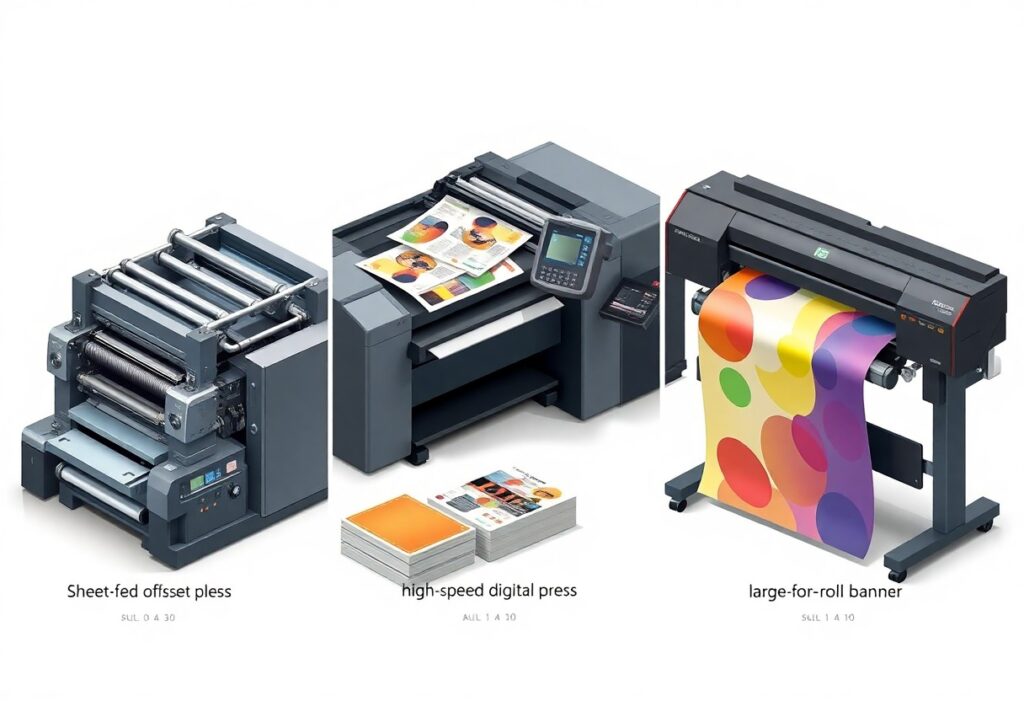
It’s time you understood how commercial printing works and which method fits your project. Offset delivers sharp, high-volume prints, digital offers speed and customization for smaller runs, and large format handles banners, posters, and signage with precision. Each has strengths tailored to specific needs, budgets, and timelines.
The Heavy Plates of Offset
Offset printing relies on metal plates etched with your design, transferring ink to rubber blankets before pressing onto paper. You get sharp, consistent results ideal for high-volume runs like brochures or packaging. The setup takes time and cost, but pays off when printing thousands of identical pieces.
Each plate is built for precision, ensuring color accuracy and fine detail across every sheet. You’ll notice the difference in rich textures and solid coverage, especially with Pantone colors. While not suited for quick turnarounds, offset remains the go-to when quality and uniformity matter most.
The Fast Logic of Digital
Digital printing delivers speed when tight deadlines loom. You benefit from quick setup times and no need for plates, making it ideal for short runs and on-demand jobs. Each print is sharp and consistent, with modern machines handling everything from business cards to brochures efficiently.
Cost drops significantly when you only produce what you need, when you need it. Variable data capabilities let you personalize each piece-names, addresses, or offers-without slowing down. This flexibility makes digital a smart choice for targeted campaigns and time-sensitive projects.
The Broad View of Large Format
Large format printing handles jobs that demand size and visual impact, from banners and posters to vehicle wraps and trade show graphics. You’re working with specialized printers that use roll-fed inkjet technology, capable of producing prints up to 10 feet wide or more. These systems often use solvent, latex, or UV-curable inks, making them durable for both indoor and outdoor applications.
Resolution and material choice directly affect how your final piece performs in real-world conditions. You’ll select substrates like vinyl, fabric, or rigid boards depending on where and how the print will be displayed. Unlike smaller print runs, large format focuses less on page count and more on surface coverage and visibility from a distance.
The Final Selection
Matching Your Project Needs
Every print job carries unique demands, and your choice of method should reflect the specifics of your project. If you’re producing high-volume marketing brochures with rich color and precise detail, offset printing delivers unmatched quality at scale. For short runs or personalized content like custom invitations, digital printing offers speed and flexibility without sacrificing professionalism.
Making the Smart Choice
You gain control when you align your goals with the right technology. Large format printing stands apart when size matters-think banners, posters, or vehicle wraps that demand attention. Consider quantity, timeline, material, and visual impact. Your final selection isn’t about the most advanced option, but the one that best serves your message, audience, and budget.
Conclusion
As a reminder, you now understand the core differences between offset, digital, and large format printing. Offset delivers high-volume precision with rich color, ideal for brochures and catalogs. Digital offers quick turnaround and customization, perfect for short runs and personalized materials. Large format handles oversized projects like banners and signage, combining durability with visual impact. Your choice depends on volume, budget, timeline, and material needs. Each method serves distinct purposes, and selecting the right one ensures professional, cost-effective results every time.