
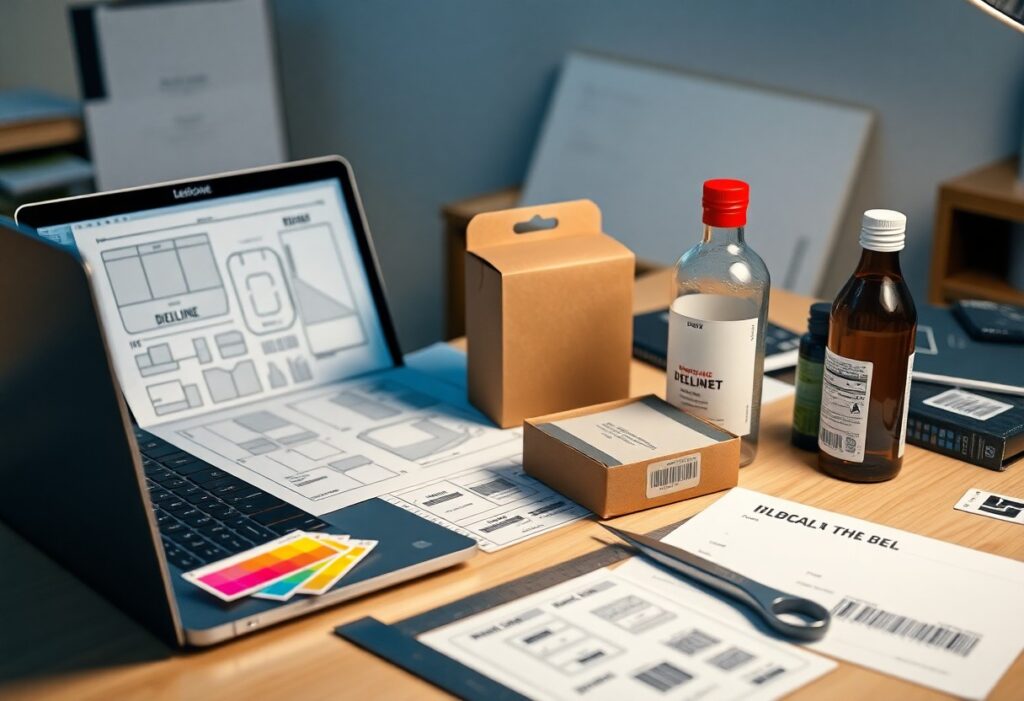
Design your retail product’s first impression with confidence. This guide walks you step by step from basic principles to professional techniques, showing how color, typography, structure, and branding shape consumer decisions. You’ll learn what works on shelves, how to avoid common mistakes, and how to create packaging that sells.
Primary Types of Retail Packaging
Retail packaging falls into distinct categories based on function and visibility. Each type serves a specific role in product delivery, protection, and presentation. Understanding these forms helps you align packaging choices with both consumer expectations and logistical demands.
Assume that every product moves through multiple stages before reaching a shelf. The right packaging mix ensures safety, compliance, and appeal at each point.
| Primary Packaging | Direct container touching the product (e.g., bottle, tube) |
| Secondary Packaging | Holds primary packages together (e.g., cardboard sleeve) |
| Tertiary Packaging | Used for bulk transport (e.g., pallets, shrink-wrapped cases) |
| Consumer-Facing | Designed for shelf impact and user experience |
| Protective Solutions | Focus on durability during shipping and storage |
Consumer-Facing Primary Containers
Your product’s first impression happens at the shelf, and the primary container shapes that moment. This packaging touches the product directly and stays in the consumer’s hands-from a shampoo bottle to a snack bag. It must communicate brand identity, provide usage clarity, and feel intuitive to open and use.
Design choices here influence purchasing decisions more than backend materials. Shape, color, labeling, and material texture all contribute to perceived value. You’re not just protecting the product-you’re presenting it.
Protective Secondary and Tertiary Solutions
Secondary packaging bundles individual units for retail display or handling, like a cardboard carrier for six drink cans. Tertiary packaging supports large-scale distribution, often invisible to shoppers-think stretch-wrapped pallets or shipping crates. Both layers ensure products arrive intact and organized.
These systems reduce damage during transit and streamline warehouse operations. You gain efficiency in logistics while minimizing losses from crushed or contaminated goods.
Protective solutions often use corrugated board, foam inserts, or shrink film to secure products through variable conditions. Temperature shifts, stacking pressure, and rough handling are real risks in distribution. Your packaging must withstand these without compromising safety or cost-efficiency. Choosing the right materials here supports both shelf readiness and supply chain reliability.
Critical Factors Influencing Design Strategy
- Brand alignment shapes how consumers perceive your product on the shelf
- Material selection impacts both sustainability and shelf appeal
- Target audience preferences dictate color, typography, and layout choices
- Production costs influence structural design and finishing options
- Shelf environment determines size, shape, and visibility needs
Assume that every visual and structural choice communicates something about your brand before a single word is read.
Brand Identity and Consumer Psychology
Color, shape, and font style trigger emotional responses before a customer reads the label. Your packaging should reflect the personality of your brand-whether it’s playful, luxurious, or trustworthy-through consistent visual language. People make split-second judgments, and those decisions are deeply influenced by subconscious cues tied to identity and experience.
Think about how luxury brands use minimalism and premium finishes to signal exclusivity. You’re not just selling a product-you’re offering a feeling. Align your design with the mindset of your ideal buyer, and they’ll feel understood before they even open the package.
Regulatory Compliance and Safety Standards
Legal requirements vary by product category and region, but all packaging must meet specific labeling rules. You need accurate ingredient lists, allergen disclosures, and proper disposal instructions visible to consumers. Ignoring these details can lead to recalls or fines.
Safety standards also dictate material durability and child-resistant features where necessary. Assume that compliance isn’t optional-it’s the baseline for market entry.
Regulatory compliance extends beyond labels to include material sourcing and environmental claims. For instance, if you state your packaging is recyclable, it must meet defined criteria in the region it’s sold. Authorities like the FDA, FTC, or EU Commission enforce strict guidelines on claims, symbols, and packaging integrity, ensuring consumer protection and fair competition. Failure to adhere undermines trust and exposes your brand to legal risk.
Step-by-Step Guide to the Design Workflow
| Phase | Key Actions |
| Research, Discovery, and Conceptualization | Market analysis, audience profiling, competitive audit, mood boarding |
| Technical Prototyping and Pre-Press Preparation | Die-line creation, material testing, color calibration, print-ready file setup |
Research, Discovery, and Conceptualization
You begin by understanding the product’s audience, shelf environment, and brand values. This phase shapes your creative direction through competitor packaging reviews and consumer behavior insights.
Insights from surveys, store visits, and trend reports inform mood boards and initial sketches. Your concepts start taking form based on real-world data, not assumptions.
Technical Prototyping and Pre-Press Preparation
Prototypes turn ideas into tangible models using accurate die-lines and material samples. You test how the design folds, seals, and displays on-shelf.
Color accuracy, bleed, and resolution are finalized for print production. Your files follow strict technical specs to avoid costly press errors.
Attention to detail here prevents delays during manufacturing. You simulate print runs digitally and produce physical mockups to evaluate structural integrity, finish application, and scannability of barcodes under retail lighting conditions.
Professional Tips for Visual Hierarchy and Impact
Clear visual hierarchy guides the consumer’s eye to the most important elements first. Use size, contrast, and placement to establish order-brand name at the top, key benefits next, supporting details last. White space enhances readability and draws focus where it’s needed most.
- Place the product name in the largest font
- Use contrasting colors for call-to-action elements
- Align text and graphics along a central axis
- Limit fonts to two per design for consistency
Any effective layout balances aesthetics with function, ensuring instant comprehension at shelf distance.
Leveraging Color Theory and Typography
Color shapes perception-warm tones suggest energy, while cool shades imply calm or trust. Match your palette to your brand’s personality and audience expectations. A skincare line might use soft blues and greens to communicate purity and natural ingredients.
Typography carries tone just as strongly as color. Sans-serif fonts feel modern and clean; serif fonts suggest tradition and reliability. Pair a bold headline font with a simple body typeface to maintain clarity. Any mismatch between type and message confuses the buyer.
Structural Innovation and Unboxing Experiences
Unique packaging shapes or opening mechanisms turn routine purchases into memorable moments. Consider how the package feels in hand, how it opens, and what surprises await inside. These details build emotional connection beyond the product itself.
Die-cut windows, magnetic closures, or layered reveals add tactile engagement. Sustainable materials can enhance this experience when they feel premium and intentional. Any well-crafted unboxing moment encourages sharing and repeat loyalty.
Structural innovation goes beyond aesthetics-it’s about creating a physical narrative. When someone lifts the lid to find compartments neatly arranged or a hidden message beneath the product, they feel personally acknowledged. This level of detail transforms packaging from a container into a story, making the user feel like part of the brand’s journey. Thoughtful engineering, like origami-style folds or reusable components, adds lasting value and distinguishes your product in a crowded market.
Material Selection: Pros and Cons of Industry Standards
Choosing the right packaging material shapes both product protection and brand perception. Below is a breakdown of common materials used in retail packaging, highlighting their strengths and limitations to guide informed decisions.
| Material | Pros and Cons |
|---|---|
| Corrugated Cardboard | Lightweight, recyclable; less resistant to moisture |
| Plastic (PET/PP) | Durable, transparent; slow to decompose |
| Aluminum | Excellent barrier, infinitely recyclable; higher cost |
| Glass | Premium feel, inert; heavy and fragile |
| Paperboard | Print-friendly, biodegradable; low moisture resistance |
| Flexible Films | Lightweight, resealable; often non-recyclable |
| Biodegradable Plastics | Compostable options available; limited durability |
| Molded Pulp | Eco-friendly, shock-absorbent; limited design flexibility |
| Wood | Strong, natural aesthetic; expensive and heavy |
| Recycled Plastics | Reduces waste; may have inconsistent quality |
Durability and Cost-Efficiency Analysis
Your product’s journey from warehouse to shelf demands materials that balance strength and affordability. Some plastics offer excellent drop resistance but raise long-term costs due to environmental fees. Cardboard may lower initial expenses yet require extra lining or coatings for protection. You need to assess how each material performs under real-world conditions while keeping production budgets in check. The cheapest option upfront might cost more in damages or replacements.
Environmental Impact and Sustainability Ratings
Consumers increasingly expect eco-conscious packaging choices. Materials like glass and aluminum score high in recyclability but carry heavier carbon footprints due to weight and energy-intensive production. Bioplastics and recycled paper reduce landfill waste, yet industrial composting access limits their effectiveness. You must weigh disposal infrastructure, sourcing ethics, and end-of-life outcomes when selecting sustainable options.
Understanding sustainability ratings means looking beyond labels like “biodegradable” or “recyclable.” Certification systems such as Cradle to Cradle or How2Recycle provide clearer insight into a material’s true environmental footprint. You should verify claims with third-party data and consider regional recycling capabilities, since a material recyclable in one country may end up in landfill elsewhere. Real sustainability combines responsible sourcing, energy use, and post-consumer recovery.
Strategic Implementation for Retail Success
Success in retail begins when your packaging aligns with both consumer expectations and store realities. You need to anticipate how your product will appear on crowded shelves and how quickly it captures attention. Every design choice should support visibility, clarity, and brand consistency while meeting retailer requirements. Your packaging must also reflect the purchasing journey. Shoppers make split-second decisions, so your visual hierarchy needs to guide them instantly to the product’s benefit. Think beyond aesthetics-consider placement, scale, and how your design holds up in real-world conditions.
Shelf Placement and Competitive Differentiation
Position matters more than you might assume when designing for retail. Your product often competes with similar shapes, colors, and messaging, so standing out requires intentional contrast. Study the shelf environment where your product will live and design to disrupt visual patterns without feeling out of place.
Consumers scan from a distance before moving in for details. Your front panel must communicate value at three feet, then deliver clarity up close. Use color blocking, unique typography, or structural elements to create a distinctive silhouette. Differentiation isn’t about being loud-it’s about being unmistakably yours.
Balancing Aesthetics with Logistics and Shipping
Beauty means little if your packaging arrives damaged or inflates shipping costs. You’re responsible for creating designs that look premium but survive transit. Consider material thickness, corner protection, and how the shape fits within standard shipping containers.
Structural choices impact both presentation and practicality. A uniquely shaped box might catch eyes on the shelf but could increase freight expenses or limit stacking. Optimize for durability and efficiency without sacrificing brand expression. The best designs solve both problems at once.
Material selection directly influences how your product feels in hand and performs in distribution. Recycled board may align with sustainability goals, but if it lacks rigidity, it could compromise protection. Test prototypes under real shipping conditions-vibration, compression, humidity. Your final design should reflect a harmony between visual appeal and physical resilience, ensuring it arrives intact and on-brand.
To wrap up
Taking this into account, you now hold a clear path from beginner to professional in retail packaging design. You understand how visual appeal, structural function, and brand messaging work together to influence customer decisions on the shelf. Every choice you make-from color and typography to material and shape-directly impacts perception and sales.
You are equipped with the principles to create packaging that communicates value, stands out in competitive markets, and meets both regulatory and sustainability demands. Apply these insights with confidence, test your designs in real-world settings, and refine based on feedback. Your packaging is not just a container-it’s a powerful extension of your brand.